6V Jump Starters for Classic Cars, Tractors and Old Motorcycles

In this guide
There is no good “6V jump starter” in the sense most people mean. Nearly every portable lithium jump pack is built for 12V systems only, and the tools that actually work on 6-volt classic cars, vintage tractors and old motorcycles are different: a 6V/12V smart charger with a 6V mode, a wheeled 6V/12V charger-starter with a 6V boost setting, or a charged 6V battery with heavy cables and the correct polarity. This guide explains which to choose and how to avoid the two classic mistakes: putting 12 volts into a 6-volt system, and getting polarity wrong on a positive-ground machine. It is based on manufacturer manuals and listings checked on 2026-10-28, not tests we ran.
Disclosure: As an Amazon Associate I earn from qualifying purchases. See /disclosure/.
Why your 12V lithium pack is the wrong tool
Modern jump packs are designed around 12V lead-acid car batteries. Their listings and manuals say so: VACASSO’s title calls its pack a “12V Battery Jumper Starter”, NOCO’s GB40 guide describes it as designed for 12V lead-acid batteries, and NOCO’s Boost X line is sold as unsuitable for 6V or 24V. None of the packs reviewed elsewhere on this site list a 6V mode.
Putting a 12V source on a 6V system is a common shortcut on antique tractors, and opinions on it differ. The cautious view is the one to follow. A Hagerty “Piston Slap” column on a 1947 Ford 8N advised against routinely running 12 volts to a 6-volt starter and recommended a smart charger that handles both 6 and 12 volts. Owners on antique tractor forums report 6V batteries being overcharged or even rupturing when connected straight to a 12V battery. A 6V system’s bulbs, gauges, generator and regulator were never designed for 12 volts either.
Your three real options
| Option | Best for | What to look for | Limits |
|---|---|---|---|
| 6V/12V smart charger | Any 6V battery that is low but healthy | A selectable 6V mode, lead-acid support | Takes hours, needs a power outlet |
| Wheeled 6V/12V charger-starter | Shops, barns and garages with power | A rated 6V boost or start output | Heavy; many start ratings are 12V only |
| Charged 6V battery or 6V vehicle | Tractor shows, field starts | Matching polarity, heavy cables | You need a second 6V source |
Option 1: charge it properly with a 6V smart charger
For most 6V owners, the honest answer to “what jump starter should I buy” is a good 6V/12V charger and maintainer. A tractor or classic car that sits for months is the textbook case for a maintainer, and a properly charged 6V battery solves most no-start problems before they happen.
The NOCO GENIUS2 6V/12V smart charger is the small, widely sold option. Its listing describes a 2A 6V/12V charger and maintainer for lead-acid (wet, gel and AGM) and lithium (LiFePO4) batteries, with temperature compensation, a desulfation mode and a Force Mode for very low batteries, and the product copy names classic cars, hot rods and tractors among its uses. NOCO’s GENIUS manuals say the 6V mode is for 6-volt lead-acid batteries only, entered by holding the mode button (for about three seconds on the models we read). At 2A, it is a maintainer and slow charger: fine for keeping a 6V battery topped up between shows, slow for recovering a large, deeply flat battery. NOCO’s larger GENIUS models also offer 6V modes at higher currents; check the specific model’s manual.
Not for: a same-minute start. A charger needs time and a power outlet.
Option 2: a wheeled 6V/12V charger-starter
Garage-style wheeled chargers from Schumacher and others offer 6V and 12V charging plus an engine-start or boost function. Read the outputs carefully, because the big start number is often 12V only:
- Schumacher SC1309 is sold as a 6V/12V wheeled charger and “200A” engine starter. Retailer spec sheets break the outputs down as 2A continuous on 6V, a 40A boost on 6V or 12V, and the 200A start on 12V only. So on a 6V tractor you get a 40A boost, not 200A.
- Schumacher SC1281 charges and maintains 6V and 12V batteries and lists a 100A engine start and 30A boost. The manual page we read does not say whether engine start works on 6V; check the full manual or ask Schumacher before relying on it for a 6V start. Its manual does say to charge for five minutes before cranking if the battery is below 2 volts.
We could not verify Amazon listings for these models when this guide was written, so they are named without links. Check the 6V output rating in the manual or spec sheet of whatever unit you buy.
Not for: field use away from power, or anyone who needs it in a truck. These are 120V shop tools.
Option 3: another 6V battery, done right
On a tractor at a show or in a field, the quickest fix is often a charged 6V battery or another 6V tractor with jumper cables, connected with matching polarity. Use heavy cables: a 6V starter draws roughly twice the current of a 12V starter for the same work, which is why 6V vehicles came with thick battery cables. Thin car jumper cables may get hot and deliver too little. Jump starter vs jumper cables covers cable gauges.
Positive ground: check before you clamp
Many older 6V cars and tractors are positive ground: the battery’s positive terminal is bolted to the frame, and the negative terminal feeds the starter. Modern vehicles and most chargers’ instructions assume negative ground. Getting it backwards can damage the generator or regulator, a point owners make repeatedly on antique tractor forums.
How to check:
- Look at the ground strap. Follow the cable from the battery to the frame or engine block. If it comes from the + post, the system is positive ground.
- Check the manual or a marque club’s resources. The VMCCA’s Shade Tree Mechanic column is a good example of club guidance on 6V systems and positive versus negative ground.
- Do not assume from the color of the cables. Previous owners rewire and convert things.
For chargers, NOCO’s GENIUS manuals give the hookup for negative-ground systems and say that positive-ground systems, which they call very uncommon, follow the steps in reverse order: on a positive-ground vehicle you connect to the negative battery terminal first, then make the final connection to the frame, and disconnect in the opposite order. Your charger’s manual governs.
For jumping from another 6V source, the rule is the same as on any vehicle: positive to positive, negative to negative, and the final connection made to a ground point away from the battery, since lead-acid batteries can vent hydrogen.
Old 6V motorcycles
Vintage bikes with 6V systems usually have small batteries that are easy to damage. Never jump one from a running car. A small 6V maintainer such as the GENIUS2 class, left connected over the winter, is the right tool, and kick-start bikes can often be started on a healthy 6V battery once it is charged. For modern 12V bikes, see best jump starter for motorcycles.
If you converted to 12V
Many classic cars and tractors have been converted to 12V, sometimes with a 12V alternator and sometimes only with a 12V battery and a resistor. If yours has a 12V battery, confirm with a voltmeter (about 12.6V at rest when charged) and confirm the ground polarity, then a 12V jump pack may be appropriate, sized as in what size jump starter do I need. Lithium packs have reverse-polarity protection, but only if you connect them to the terminals the manual names. How to use a jump starter covers the procedure.
Off-season storage for a 6V battery
Most 6V no-starts begin in storage. Before the machine goes away for the winter, charge the battery fully on the 6V setting, clean the terminals, and either leave a maintainer connected or disconnect the ground cable so small drains cannot pull it down. Check the electrolyte level on flooded batteries if the manual allows, and top up with distilled water only. If the battery has to come off the machine, store it somewhere it will not freeze; a discharged lead-acid battery freezes at a much higher temperature than a charged one. Then the spring start is a matter of turning the key, not hunting for a booster.
Mistakes to avoid
- Using a 12V lithium pack on a 6V system because it is what is in the truck.
- Ignoring polarity on a positive-ground machine.
- Reading a charger’s 12V start rating as a 6V rating. On the Schumacher SC1309, 6V gets 40A, not 200A.
- Thin jumper cables on a high-current 6V starter.
- Letting a 6V battery sit flat all winter. A maintainer prevents most no-starts; a jump pack is not a charger (can a jump starter charge a dead battery?).
Bottom line
- Most 6V owners: a 6V/12V smart charger and maintainer such as the NOCO GENIUS2.
- Shop or barn with power: a wheeled 6V/12V charger-starter, checked for its 6V boost rating.
- In the field: a charged 6V battery and heavy cables, polarity matched.
- Converted to 12V: a normal 12V jump pack, after confirming voltage and ground.
Frequently asked questions
Can I use a 12V jump starter on a 6V car or tractor?
It is not recommended. Nearly every lithium jump pack is built for 12V systems only, and putting 12 volts into a 6-volt system can overcharge or damage the 6V battery and stress the starter, lights and charging system. A Hagerty column on a 1947 Ford 8N advised against habitually running 12 volts to a 6-volt starter and recommended a smart charger that handles both 6V and 12V instead.
Is there a 6V lithium jump starter?
We could not confirm any mainstream 6V-capable lithium jump pack on Amazon when this guide was written. The practical 6V tools are 6V/12V battery chargers with a 6V charge mode, wheeled 6V/12V charger-starters with a 6V boost setting, and a good 6V battery with heavy cables.
What is positive ground and why does it matter for jump starting?
On a positive-ground vehicle, the battery's positive terminal connects to the frame, the reverse of modern cars. Many older 6V cars and tractors are wired this way. Connecting a charger or booster with the wrong polarity can damage the generator or regulator, so confirm which terminal is grounded before you clamp anything on. NOCO's GENIUS manuals say positive-ground systems follow the hookup steps in reverse order.
How do I charge a 6V tractor battery?
Use a charger with a dedicated 6V mode, such as NOCO's GENIUS2, which its maker lists as a 6V/12V smart charger and maintainer for lead-acid and lithium batteries. Set it to 6V before charging; NOCO's manuals say the 6V mode is for 6-volt lead-acid batteries.
Can I jump a 6V tractor from my truck?
Not from a 12V truck through its battery. Owners on antique tractor forums report 6V batteries being overcharged or damaged that way. Jump from another 6V vehicle or a charged 6V battery with matching polarity, or charge the tractor's battery properly.
Keep planning
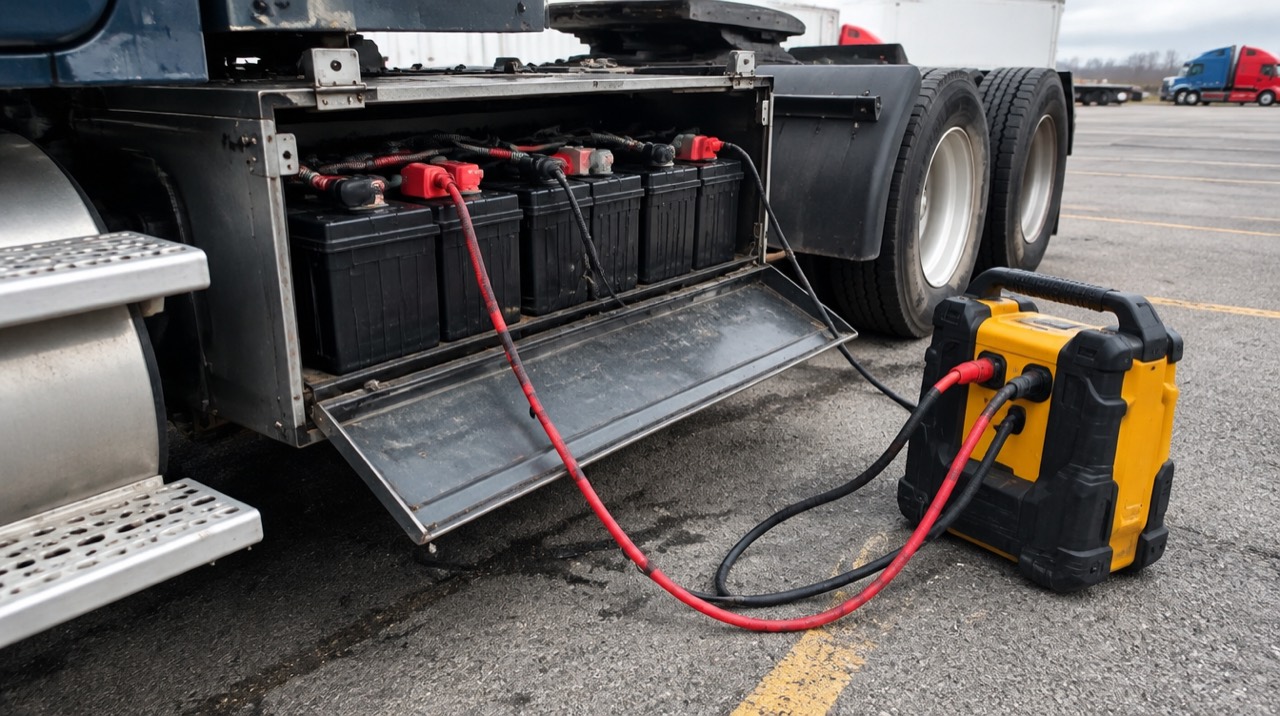
- Best 24V Jump Starter for Semis, Buses and Heavy Equipment
How to pick a 24V jump starter: confirm the system is really 24V, then compare 12V/24V packs like NOCO's GB500, TOPDON's V4000 HD and Clore's JNC1224.
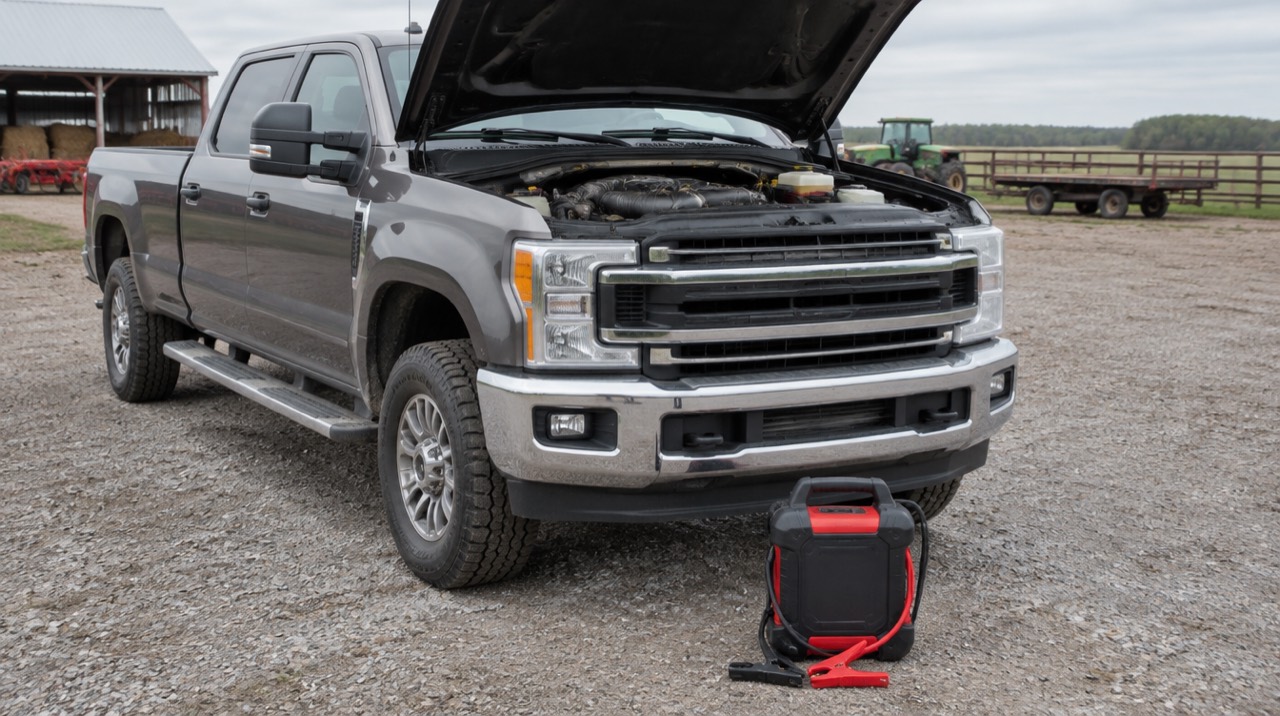
Updated Oct 2026 - Best Jump Starter for Diesel Trucks: What Size Actually Works
How to pick the best jump starter for a diesel truck: match the maker's diesel liter rating, not peak amps, plus dual batteries, 24V systems and cold starts.
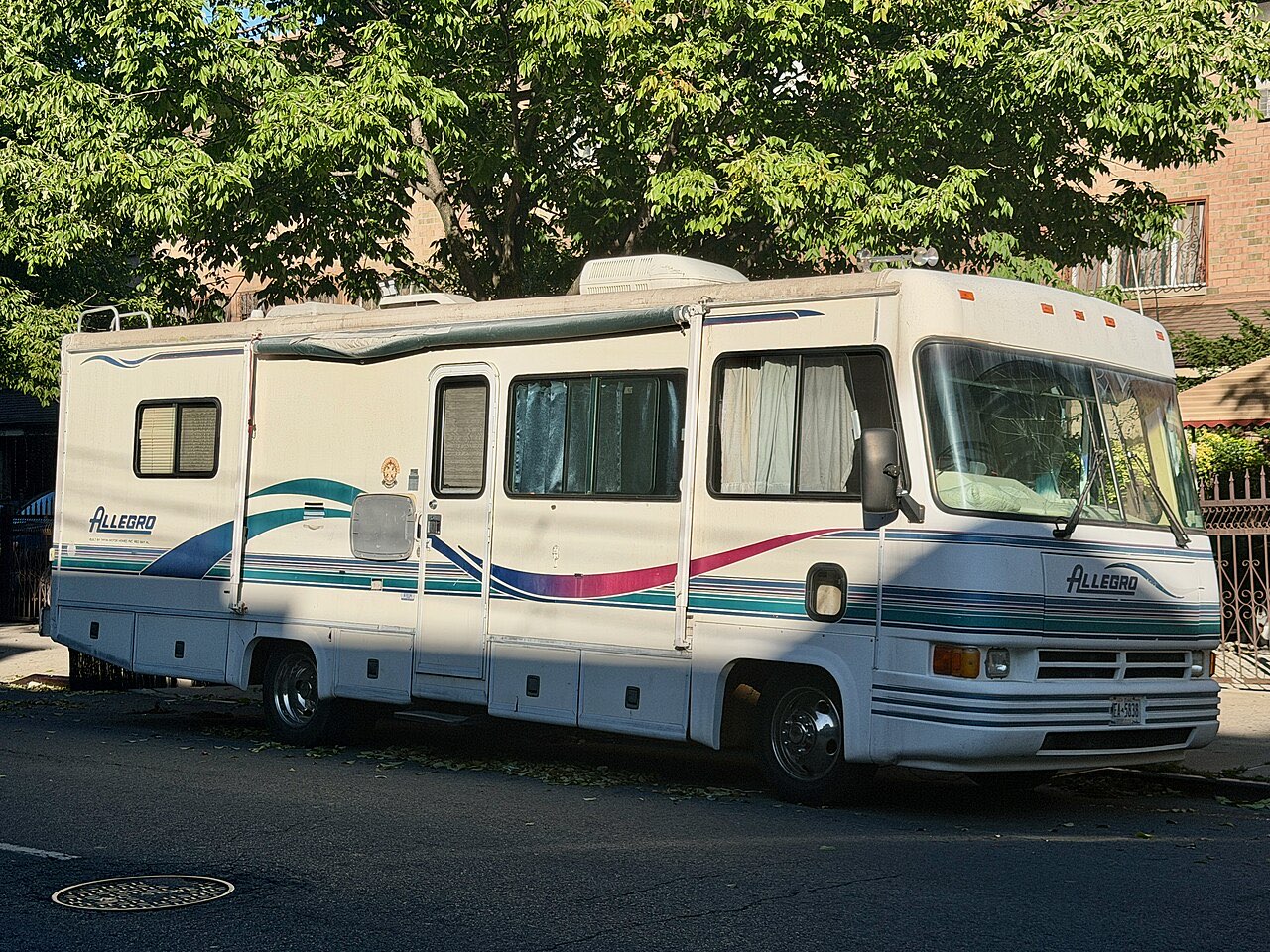
Updated Oct 2026 - Best Jump Starter for RVs: Chassis vs House Batteries
The best jump starter for an RV is sized to the chassis engine, not the house bank. Class A, C and B sizing, the boost switch, and spec-based picks.
Updated Oct 2026