Best Portable Jump Starter: Spec-Based Picks by Engine Size
In this guide
The best portable jump starter is the smallest one whose published engine rating covers your engine, for your fuel, with some headroom for cold weather. For most gas cars and small SUVs that is a pack rated to about 6L gas (NOCO Boost GB40 class); V8 trucks and diesels need a pack rated for their displacement on the diesel line of the spec, which usually means a 2000A to 4000A unit. This is a spec-based roundup: every pick below is compared on the maker’s published ratings, read from the current listings on 2026-10-28, not on tests we ran. Ratings on the box that arrives win over anything written here.
Disclosure: As an Amazon Associate I earn from qualifying purchases. Some brands featured below pay a bonus commission through Amazon Creator Connections. See /disclosure/.
Why the amp number is the wrong place to start
Every jump starter box leads with a peak amp figure: 1000A, 2000A, 4000A. Peak amps are a momentary maximum and there is no single industry test that every brand uses to state them, so the figure is not comparable across brands. Two current listings show the problem clearly:
- The WOLFBOX MV24A is a 4000A pack rated for 10L gas and 6L diesel.
- The GOOLOO GP4000 is also a 4000A pack, rated for all gas engines and diesel up to 10.0L.
Same headline amps, a 4-liter difference in diesel rating. The number that actually tells you whether a pack will start your engine is the maker’s own engine rating, which every reputable brand prints as a gas displacement and a diesel displacement. Peak amps vs cranking amps goes deeper into the terms; what size jump starter do I need walks through the sizing in detail.
Within a single brand, though, the ladder is consistent and useful. NOCO’s current Boost lineup shows how the ratings climb:
| NOCO model | Peak amps | Gas rating | Diesel rating | Starts per charge (maker) | Weight |
|---|---|---|---|---|---|
| GB40 | 1000A | 6.0L | 3.0L | up to 20 | 2.5 lb |
| GB50 | 1500A | 7.0L | 4.5L | up to 30 | 2.7 lb |
| GB70 | 2000A | 8.0L | 6.0L | up to 40 | 5.0 lb |
| GB150 | 3000A | 9.0L | 7.0L | up to 80 | 7.5 lb |
Per the Amazon listings, checked 2026-10-28.
Notice the diesel column runs well below the gas column. Diesels have high compression and, on most, glow plugs that pull current before cranking, so every maker derates them.
The picks, by engine
Compact and midsize gas cars (up to about 3.5L): NOCO Boost GB40
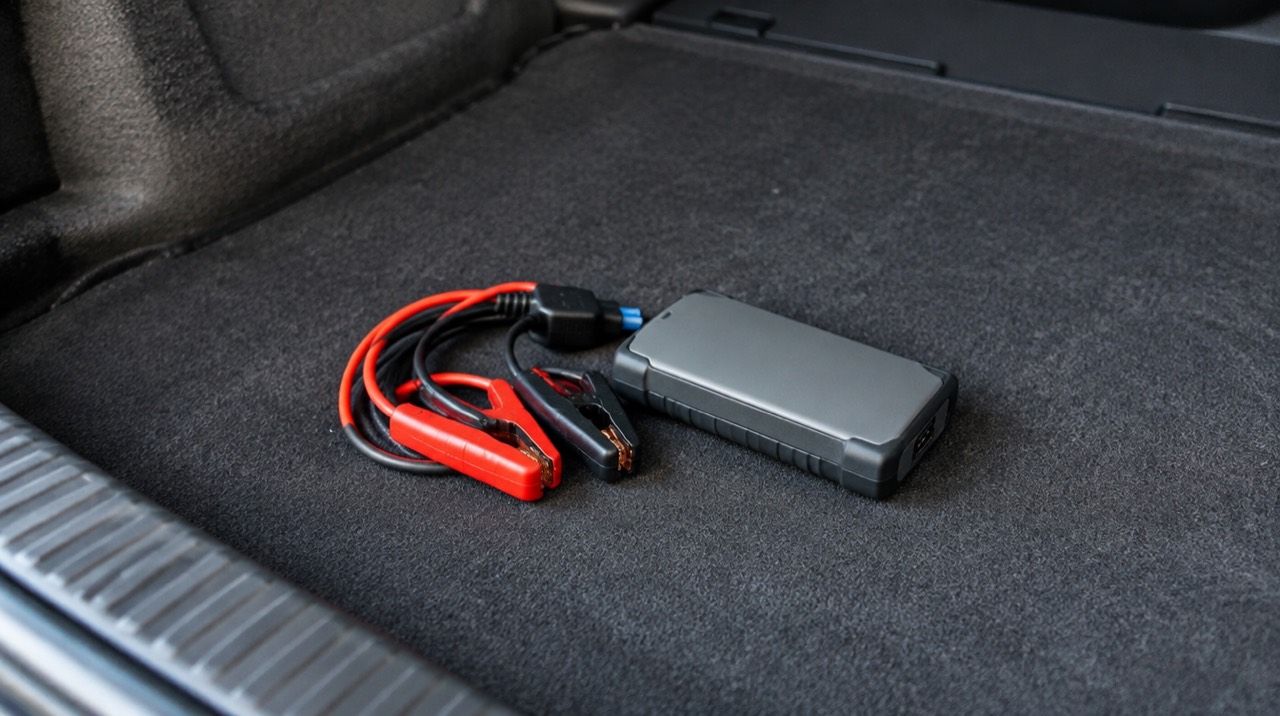
NOCO Boost GB40. 1000A peak, rated for gas engines up to 6.0L and diesel up to 3.0L, up to 20 starts per charge, 3-hour recharge, 100-lumen light, IP65 housing, 2.5 lb, 1-year warranty, per the listing. The rating gives a four-cylinder or small V6 a wide margin, and the size means it actually stays in the car. NOCO’s user guide describes spark-proof and reverse-polarity protection, plus a Manual Override for batteries below 2 volts that switches those protections off, so read the manual before you ever need that button.
Who it is for: commuter cars, crossovers, motorcycles and lawn tractors. Not for: V8 trucks, diesels over 3.0L, or anyone who wants a built-in air compressor.
Budget alternative in the same class: AstroAI S8
AstroAI S8. The listing is rated for 6L gas and 3L diesel, the same engine class as the GB40, with a boost indicator when battery voltage is under 9V and a stated operating range of -4°F to 122°F. One caution: the product title says 3000A while the first bullet says 1500A peak. The engine rating is consistent, so size it on that and ignore both amp figures. AstroAI’s listing also gives a useful storage rule: recharge to about 60 percent if it will sit unused for more than 3 months, and do not leave it in a sun-baked trunk.
Who it is for: the same cars as the GB40 when you want to compare the current price on Amazon. Not for: diesels over 3L.
V6 and V8 gas, small diesels: NOCO Boost GB50 or GB70
NOCO Boost GB50 steps up to 7.0L gas and 4.5L diesel at 2.7 lb, barely heavier than the GB40, with up to 30 starts per charge. If you drive a 5.0L or 5.7L V8 in a cold state, this is the smallest NOCO with real headroom.
NOCO Boost GB70 is rated for 8.0L gas and 6.0L diesel with up to 40 starts per charge and a 400-lumen light, at 5.0 lb. That diesel line covers a lot of light-duty diesels in the 3.0L to 6.0L range. Check your engine’s displacement against 6.0L before you assume it fits.
Who they are for: full-size SUVs, half-ton pickups, vans, and small to midsize diesels. Not for: the largest diesel pickups, where the 6.0L diesel ceiling is too close.
Large diesel pickups and big V8s: GOOLOO GP4000 or NOCO GB150
GOOLOO GP4000. 4000A, rated for all gas engines and diesel up to 10.0L, 88.8Wh battery, more than 60 starts per charge (maker claim), a BOOST button for very low battery voltage, a stated temperature range of -4°F to 140°F and an 18-month warranty, per the listing. It also has a 15V DC output that can run a 12V accessory such as a plug-in inflator. A wall charger is not included. On published ratings it is the widest-coverage pack in this roundup, which makes it the default pick for a 6.6L or 6.7L diesel.
NOCO Boost GB150. 3000A, rated for 9.0L gas and 7.0L diesel, up to 80 starts per charge, 500-lumen light, 7.5 lb, 1-year warranty. Its 7.0L diesel rating covers most diesel pickups on paper, with less headroom than the GP4000 for the biggest engines.
Who they are for: heavy-duty pickups, diesel vans, RVs with a 12V chassis battery, boats with large outboards or inboards. Not for: glove boxes, and not for 24V systems.
Middle ground with diesel headroom: GOOLOO GP3000
GOOLOO GP3000. 3000A, rated for 9.0L gas and 7.0L diesel, 16,000 mAh, BOOST mode that kicks in when the battery is below 9V, 15W USB-C, 400-lumen light and an 18-month warranty. The listing says to recharge every 90 days. On paper it matches the GB150’s engine rating; compare current price and size.
Side-by-side
| Pack | Peak (maker) | Gas | Diesel | Warranty (listing) | Best for | Not for |
|---|---|---|---|---|---|---|
| NOCO GB40 | 1000A | 6.0L | 3.0L | 1 year | Cars, crossovers, bikes | V8s, diesels >3L |
| AstroAI S8 | 1500A (bullet) | 6L | 3L | not stated in listing text read | Same as GB40 | Diesels >3L |
| NOCO GB50 | 1500A | 7.0L | 4.5L | 1 year | V8 gas, cold climates | Large diesels |
| NOCO GB70 | 2000A | 8.0L | 6.0L | 1 year | Half-ton trucks, small diesels | 6.6L+ diesels |
| GOOLOO GP3000 | 3000A | 9.0L | 7.0L | 18 months | Diesels to 7L | Glove box |
| NOCO GB150 | 3000A | 9.0L | 7.0L | 1 year | Diesels to 7L, fleets | Glove box |
| GOOLOO GP4000 | 4000A | All gas | 10.0L | 18 months | Largest diesel pickups | 24V systems |
Specs as listed on Amazon on 2026-10-28; check the current price on Amazon and the rating on the box.
How to choose in three steps
- Find your engine displacement and fuel. It is in the owner’s manual, on the emissions label under the hood, or in the trim description (a “5.3L V8” or a “6.7L diesel”).
- Read the maker’s rating for your fuel. Pick the smallest pack whose gas or diesel rating equals or beats your engine. If you live where winter lows sit well below freezing, or the car sits for weeks, go one rung up. Cold makes both the dead battery and the lithium pack weaker; jump starters in cold weather explains why.
- Check voltage and size. All the packs here are 12V. Then make sure the pack fits where you will actually keep it. A 7.5 lb pack that lives in the garage does nothing for a dead battery at work.
Safety and certification
Lithium jump starters store a lot of energy in a small box. The safety standard that covers them in North America is UL 2743, the UL Solutions standard for portable power packs, which includes the booster (jump-start) function. Not every listing says whether the product is certified to it, so if certification matters to you, look for the UL mark on the product or ask the seller before you buy.
Recalls happen. In 2015 the U.S. Consumer Product Safety Commission announced a recall of Whistler Jump&Go units over lithium batteries that could overheat. Before you buy, search the brand on cpsc.gov, and register the product so the maker can reach you. Lithium jump starter safety covers storage and heat.
Mistakes to avoid
- Buying on peak amps alone. Use the gas and diesel engine rating.
- Matching a diesel to the gas number. A GB70 is an 8.0L gas pack but only a 6.0L diesel pack.
- Letting it go flat. A jump starter that has sat at 0 percent for a year may not start anything. Put a recharge reminder in your calendar.
- Leaving it on the dashboard in summer. Makers warn against high heat; keep it under a seat or in the trunk cargo area and bring it inside in heat waves.
- Skipping the manual. Clamp order, how long to crank and how long to rest between attempts differ by model. How to use a jump starter has the step-by-step from the manuals.
- Treating it as a charger. A jump starter gets the engine running; it does not recharge a battery that is failing. Can a jump starter charge a dead battery? explains the difference.
Bottom line
- Most gas cars and crossovers: NOCO Boost GB40 or AstroAI S8 (6L gas class).
- V8 gas, cold climates: NOCO Boost GB50 or GB70.
- Light and midsize diesels up to 6L: NOCO Boost GB70.
- Diesels up to 7L: GOOLOO GP3000 or NOCO Boost GB150.
- The biggest diesel pickups (6.6L to 6.7L and up): GOOLOO GP4000.
Check the current price on Amazon, then read the engine rating on the box before you rely on it.
Frequently asked questions
What is the best portable jump starter for most cars?
For a typical four-cylinder or small V6 gas car, a pack rated for at least 6.0L gas, such as the NOCO Boost GB40, covers the engine with a margin, weighs about 2.5 lb and fits a glove box. Step up to a pack rated for 7 to 8L gas (NOCO GB50 or GB70) if you have a V8, live somewhere with hard winters, or want more starts per charge.
Is a 4000A jump starter better than a 2000A one?
Only if its engine rating is higher. Peak amps are not measured the same way across brands, so the number is not comparable from one maker to the next. Compare the gas and diesel displacement ratings each maker publishes instead: a 4000A unit from one brand is rated for 10L diesel, while a 4000A unit from another is rated for 6L diesel.
Do I need a different jump starter for a diesel truck?
You need a bigger one. Every maker rates diesel engines lower than gas engines of the same size because diesels need more cranking current. NOCO's GB70, for example, is rated for 8.0L gas but 6.0L diesel. Match the diesel figure to your engine, not the gas figure.
Can a lithium jump starter start a 24V truck?
Not the 12V models covered here. Every pack in this guide is a 12V booster. Heavy trucks and some equipment with 24V systems need a pack that is specifically rated for 24V.
How often should I recharge a jump starter that sits in the car?
Follow your manual. GOOLOO's listings say to recharge every 2 to 3 months (GP4000) or every 90 days (GP3000), and AstroAI says to bring the S8 to about 60 percent if it will sit unused for more than 3 months. Checking it every time the clocks change is an easy habit.
Keep planning
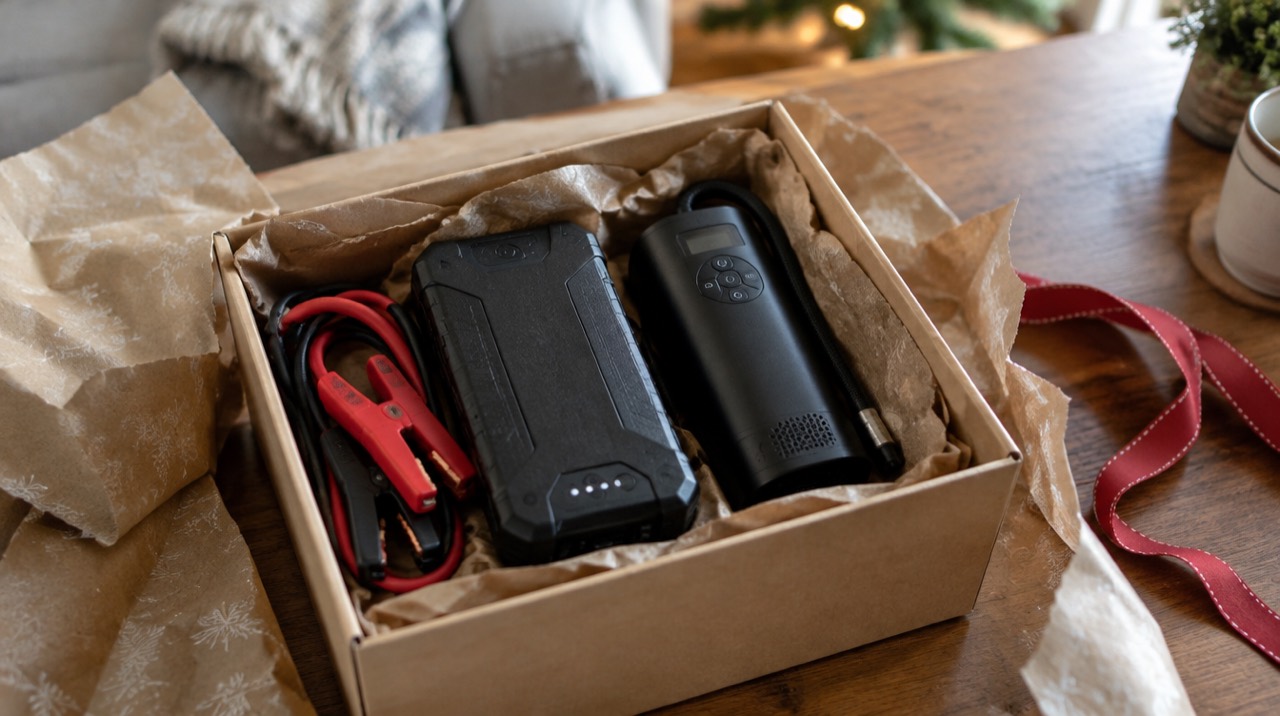
- Jump Starter Gift Guide 2026: Picks for Every Driver on Your List
Holiday gift guide for jump starters and tire inflators, grouped by who it is for: teen drivers, cold commuters, truck owners, road-trippers and gadget fans.
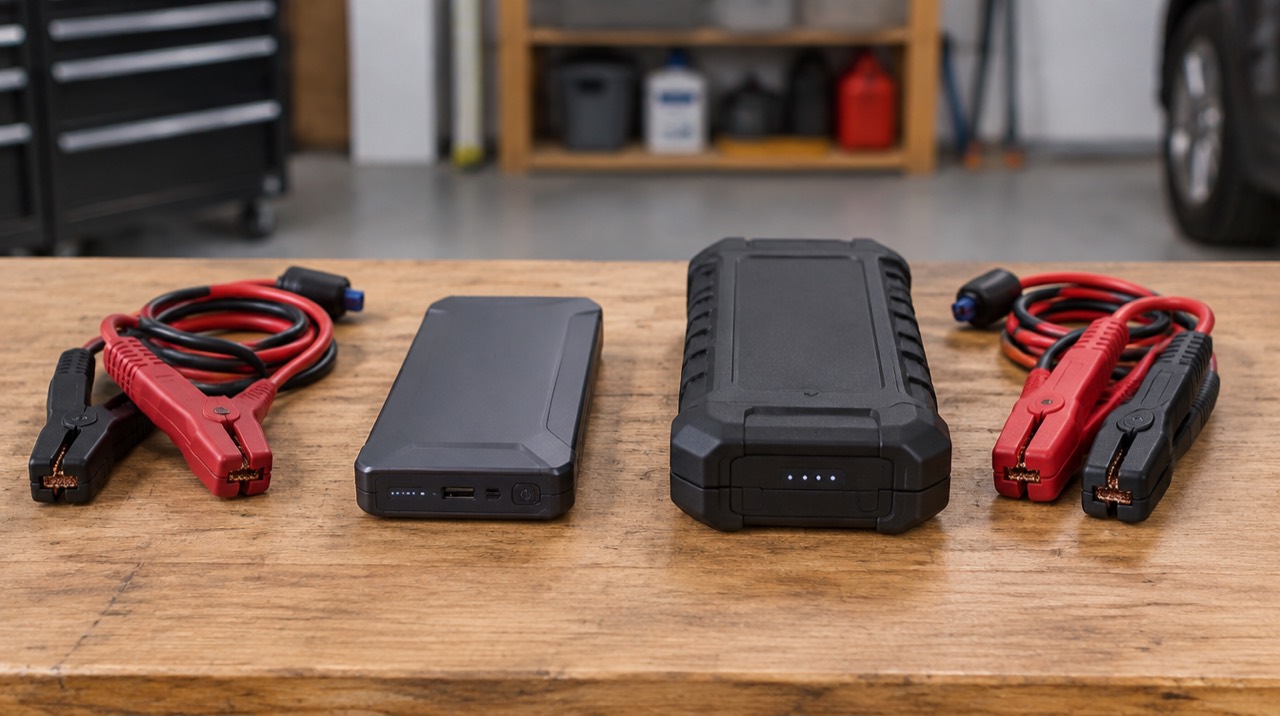
Updated Oct 2026 - NOCO vs GOOLOO Jump Starters: Specs Compared
NOCO vs GOOLOO jump starters compared on published specs: engine ratings by gas and diesel, weight, warranty, boost modes and which lineup fits your vehicle.
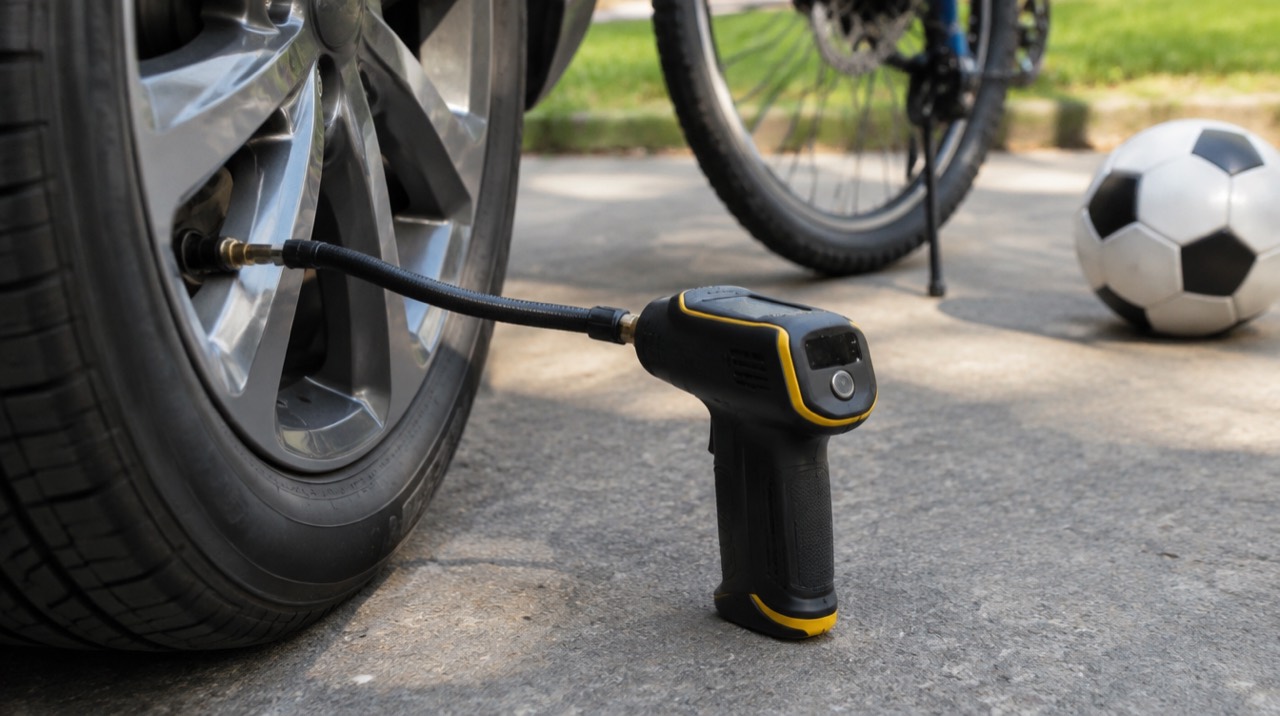
Updated Oct 2026 - Best Cordless Tire Inflator for Cars, Bikes and Balls
Spec-based picks for the best cordless tire inflator: fill time, battery size, dual 12V power, PSI limits and which models suit cars, SUVs, bikes and balls.
Updated Oct 2026