Best Jump Starter for Small Cars and 4-Cylinder Engines
In this guide
The best jump starter for a small car or 4-cylinder engine is a compact 12V lithium pack that the maker rates for 6L to 8L gas. That is two to four times the displacement of a typical 1.5L to 2.5L four, which sounds like overkill but is the headroom that covers a cold morning, a battery that has been dead for a week and a pack you forgot to recharge. You do not need a 4000A brick. This is a spec-based guide: every pack below is compared on the maker’s published ratings from the current Amazon listings, read on 2026-10-28, not on tests we ran.
Disclosure: As an Amazon Associate I earn from qualifying purchases. Some brands featured below pay a bonus commission through Amazon Creator Connections. See /disclosure/.
Size by the gas liter line, not the amp number
Every reputable jump starter carries an engine rating in liters: one number for gas and a lower one for diesel. That is the maker’s own sizing figure, and it is the one to compare. The headline peak-amp number is not: brands measure it in different ways, so a 1000A pack from one company can be rated for a bigger engine than a 2000A pack from another. Peak amps vs cranking amps explains why, and NOCO’s own Boost FAQ sizes its packs by engine displacement rather than amps.
For a 4-cylinder car, the arithmetic is easy. Most fours run between roughly 1.0L and 2.5L. Any pack rated for 3L gas or more covers that on paper. The question is how much margin you want on top:
| Your situation | Minimum gas rating | Comfortable gas rating |
|---|---|---|
| 1.0L to 2.0L gas, mild climate, newer battery | 3L | 4L to 6L |
| 2.0L to 2.5L gas, or cold winters | 4L | 6L to 8L |
| Small diesel (1.5L to 2.2L) | match the diesel line | 3L to 4.5L diesel |
| Hybrid 12V auxiliary battery | per owner’s manual | small pack is fine |
The “comfortable” column is our editorial guidance, not a manufacturer figure. No maker publishes how much its rating drops at 0°F, and a lithium pack loses output when it is cold, much as a car battery does: AAA figures quoted in news coverage put a car battery’s strength loss at about 35% at 32°F and about 60% at 0°F. Jump starters in cold weather covers the details. For the general sizing method, see what size jump starter do I need.
Spec comparison: compact packs that cover a 4-cylinder
| Pack | Peak (maker) | Gas | Diesel | Notes from listing |
|---|---|---|---|---|
| NOCO Boost GB40 | 1000A | 6.0L | 3.0L | 2.5 lb, IP65, up to 20 starts |
| AstroAI S8 | 1500A (bullet) | 6L | 3L | title says 3000A; store at 60% |
| Odifni 8-in-1 | 800A | 6.0L | 3L | 150 PSI compressor (bullets) |
| NOCO Boost GB50 | 1500A | 7.0L | 4.5L | 2.7 lb, IP65, up to 30 starts |
| Giroago 6000A | 6000A | 7.0L | 6.0L | 150 PSI compressor |
| ETENWOLF J1 | 2000A | 8.0L | 6.5L | IP65, starts from 9V, up to 35 starts |
| WOLFBOX MV16 | 3000A | 8L | 6L | IP64, 65W USB-C |
| VACASSO Z08 | 5000A | 10L | 8L | up to 50 starts, hard case |
Per the Amazon listings, checked 2026-10-28. Check the current price on Amazon and confirm the rating printed on the box.
Notice the peak column against the gas column: the 800A Odifni and the 1000A NOCO GB40 carry the same 6L gas rating, while the 6000A Giroago is rated only one liter higher. On a small car, any of the top five rows is enough on paper; the bottom three buy you diesel capability or extra headroom you may not need.
The picks, by driver
Smallest pack that still has margin: NOCO Boost GB40
The NOCO Boost GB40 is the reference point for small cars. Its listing rates it for gas engines up to 6.0L and diesels up to 3.0L, at 2.5 lb, IP65, with up to 20 starts per charge and a 3-hour recharge. On a 2.0L four that is three times the displacement, which is plenty of headroom for a glove box or under-seat kit. Its user guide describes clamp order, 30-second crank limits and a Manual Override that switches off the spark-proof and reverse-polarity protection, so read it before you need it. If you want a little more battery in nearly the same size, the NOCO Boost GB50 (7.0L gas, 4.5L diesel, 2.7 lb) is the step up.
Best headroom for cold climates: ETENWOLF J1
If you also want USB-C charging: WOLFBOX MV16
Jump pack plus tire inflator in one: Odifni 8-in-1 or Giroago
Many small-car drivers would rather carry one box than two. Both of these combine a jump pack with a 150 PSI compressor for topping up car tires.
Combo units are convenient, but the compressor in a jump pack is a top-off tool, not a shop compressor. Jump starter with air compressor explains what to expect from them.
Covers a second, bigger car too: VACASSO Z08
If the household’s other vehicle is a large SUV or truck, best jump starter for SUVs and best portable jump starter cover the larger sizes.
Small-car details that matter more than amps
Where the battery lives. Some compact cars put the battery in the trunk or under a seat and provide remote jump terminals under the hood. Use the terminals the owner’s manual names; where to connect a jump starter explains the common layouts.
Start-stop and AGM batteries. Many newer small cars with automatic engine start-stop use AGM batteries and a battery monitoring sensor on the negative cable. Follow the manual’s jump-start points, which often specify a chassis ground rather than the negative post. See jump starting a car with start-stop.
Hybrids. A hybrid’s 12V auxiliary battery only powers the electronics that “boot” the car, so even a small pack works, but the connection points vary. How to jump-start a hybrid covers it.
Cable length. Compact packs often have short leads. In a tightly packed engine bay, check that the pack can sit securely somewhere stable with both clamps reaching.
How to use it on a small car
The procedure is the same as on any car, and your pack’s manual governs. In outline:
- Turn off the ignition, lights and accessories.
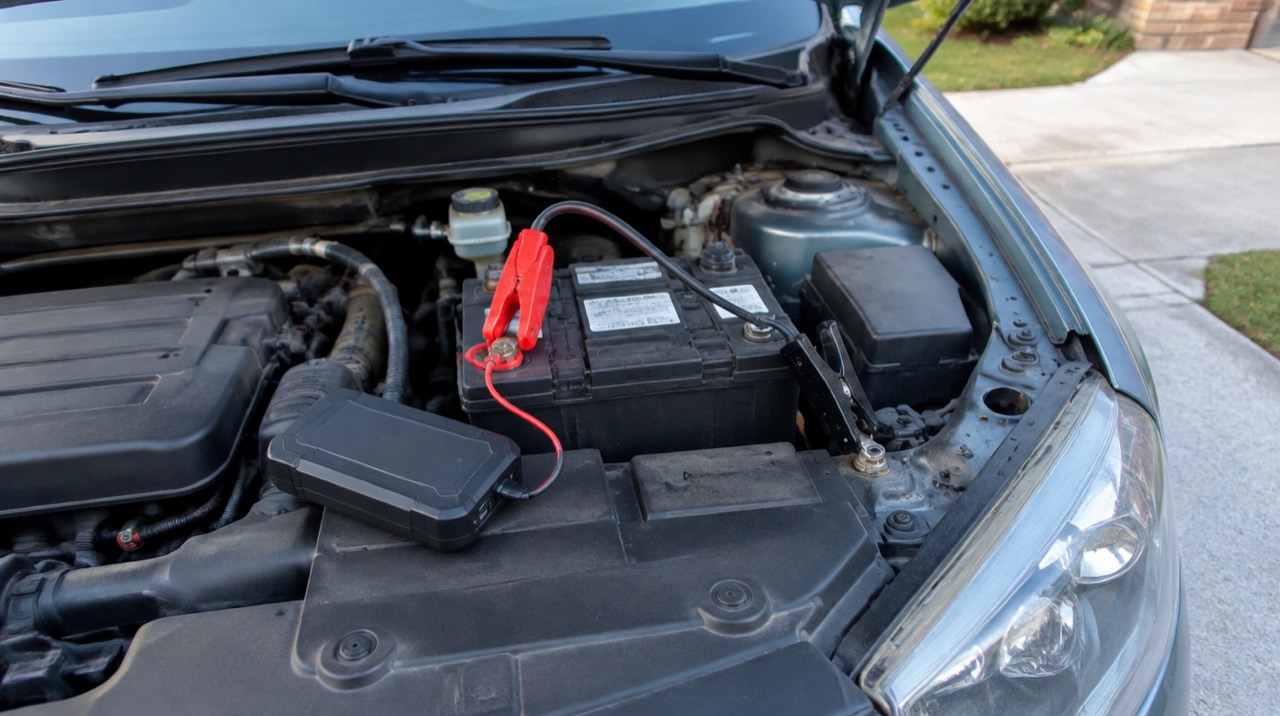
- Connect the red clamp to the positive terminal, then the black clamp to the negative terminal or an unpainted metal ground point the manual names.
- Wait for the pack’s ready indicator, then crank for no more than the time the manual allows (NOCO’s GB40 guide says up to 30 seconds, with 20 to 30 seconds between attempts).
- Once the engine runs, disconnect black first, then red, and drive for a while so the alternator can recharge the battery.
How to use a jump starter walks through the full sequence, and car won’t start after a jump start covers what to check when the engine still will not catch.
Safety and storage
Small packs often live in the glove box, which is exactly where heat builds up in summer. Most listings here give an operating range topping out at 122°F to 140°F, and NOCO’s FAQ warns that a closed car can reach 122°F within minutes in the sun. In hot weather, keep the pack in a shaded spot or bring it inside. Put a recharge reminder on your calendar every 2 to 3 months, the shortest interval among these listings. The safety standard for portable power packs, including the jump-start function, is UL 2743; none of the listings above name it, so look for the UL mark on the product itself if certification matters to you. Lithium jump starter safety covers storage, swelling and recalls.
Mistakes to avoid
- Buying by peak amps. An 800A and a 1000A pack carry the same 6L gas rating here, while a 6000A pack is rated 7L.
- Sizing a small diesel to the gas line. Diesels need the diesel rating, which is always lower.
- Buying the biggest pack for one small car. You pay for size and weight you never use.
- Letting the pack sit flat. A dead jump starter is just a heavy paperweight in the glove box.
- Using Manual Override or force-start casually. Those modes switch off protections; read the manual first.
Bottom line
- Smallest sensible pack for a 4-cylinder: NOCO Boost GB40 (6.0L gas).
- Most headroom for cold climates in a compact body: ETENWOLF J1 (8.0L gas, 6.5L diesel).
- Jump pack plus USB-C power bank: WOLFBOX MV16 (8L gas).
- One box with a tire inflator: Giroago 6000A (7.0L gas) or Odifni 8-in-1 (6.0L gas).
- Also covers a big truck in the household: VACASSO Z08 (10L gas, 8L diesel).
Check the current price on Amazon, then confirm the engine rating on the box before you rely on it.
Frequently asked questions
What size jump starter do I need for a 4-cylinder car?
A 12V lithium pack whose maker rates it for at least 3L to 4L gas covers almost every 4-cylinder car on paper. In practice, a pack rated around 6L gas (the NOCO GB40 class) leaves useful headroom for cold mornings, an older battery and a partly drained pack.
Is a 1000A jump starter enough for a small car?
Usually, yes, if the maker rates it for your engine. The NOCO Boost GB40 is a 1000A pack rated for gas engines up to 6.0L, which covers 4-cylinder engines with room to spare. Judge by the gas liter rating, not the amp figure, because brands measure peak amps differently.
Is a bigger jump starter bad for a small car?
No. A properly designed pack only delivers the current the starter motor draws, so a larger pack will not harm a small car. The downsides are size, weight and cost, plus a battery you have to keep topped up.
Do I need a diesel rating for a small car?
Only if your small car is a diesel. Small diesels such as 1.5L to 2.0L engines need a pack whose diesel rating meets the displacement, which is a lower number than the gas rating on every pack.
Can a small jump starter charge my phone too?
Most can. Nearly every compact lithium pack includes a USB port, and many newer ones have USB-C. Use the phone-charging feature sparingly in an emergency kit so the pack still has enough charge to start the car.
Keep planning
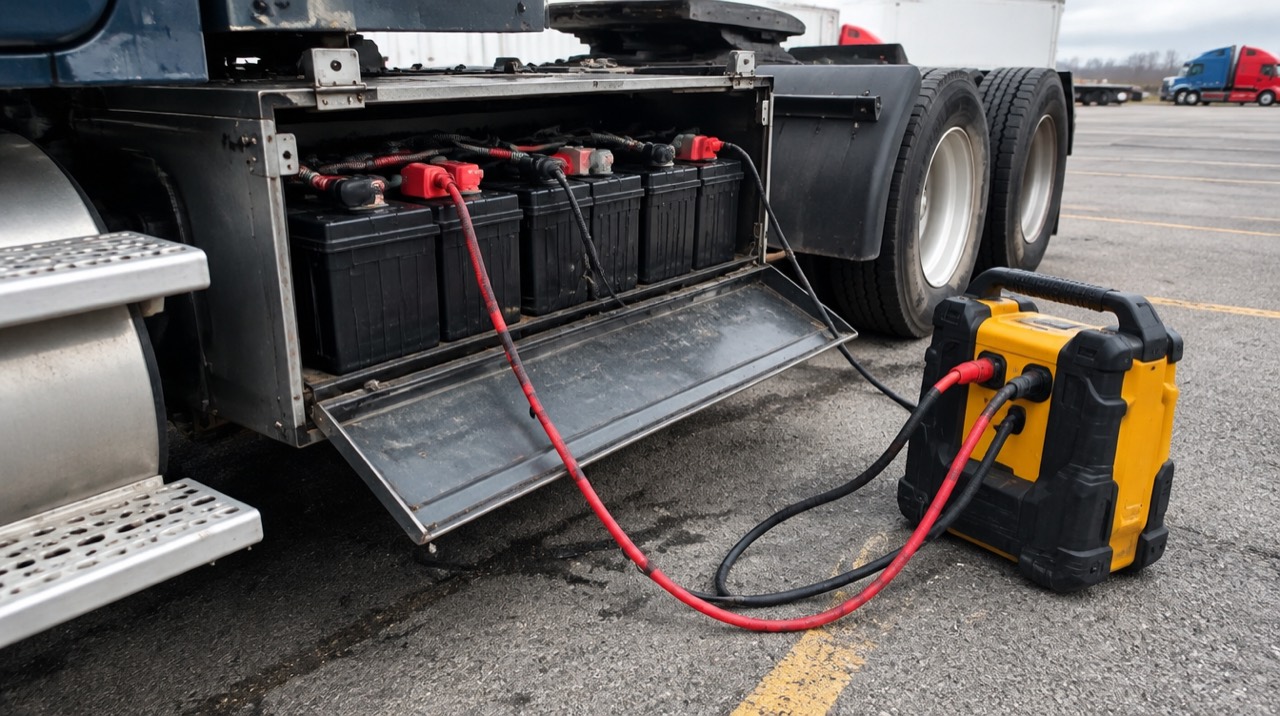
- Best 24V Jump Starter for Semis, Buses and Heavy Equipment
How to pick a 24V jump starter: confirm the system is really 24V, then compare 12V/24V packs like NOCO's GB500, TOPDON's V4000 HD and Clore's JNC1224.
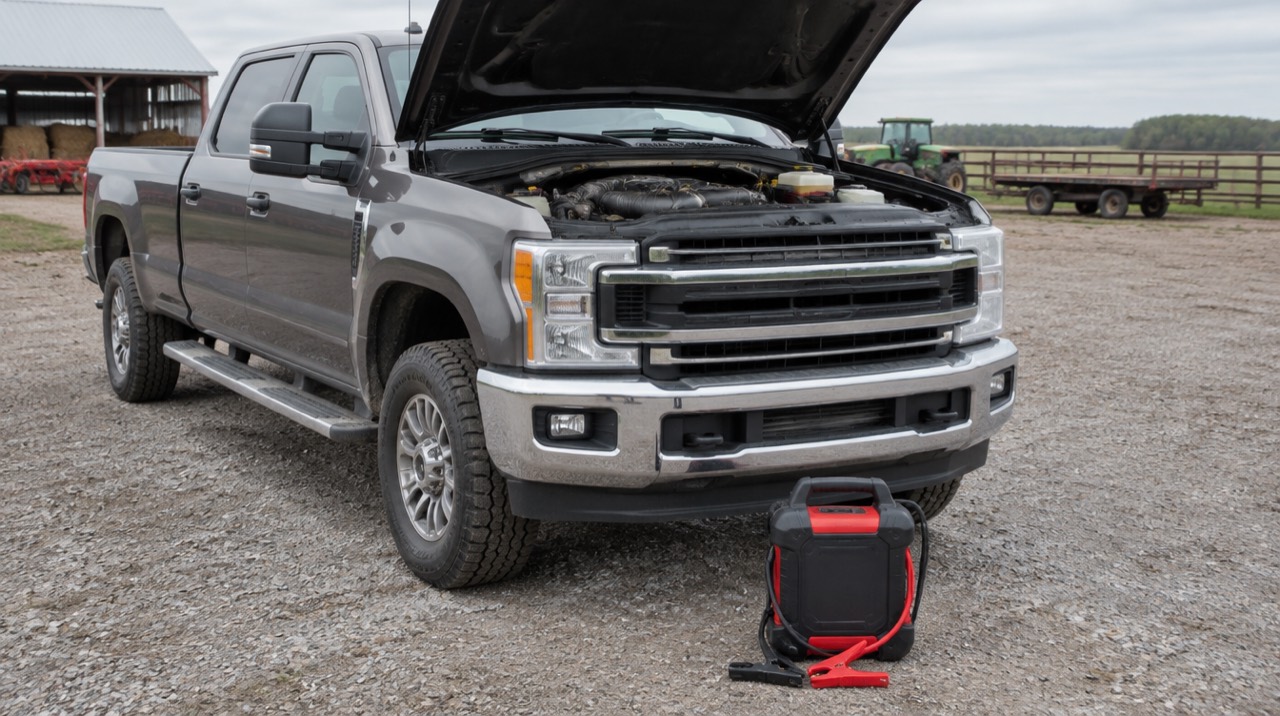
Updated Oct 2026 - Best Jump Starter for Diesel Trucks: What Size Actually Works
How to pick the best jump starter for a diesel truck: match the maker's diesel liter rating, not peak amps, plus dual batteries, 24V systems and cold starts.
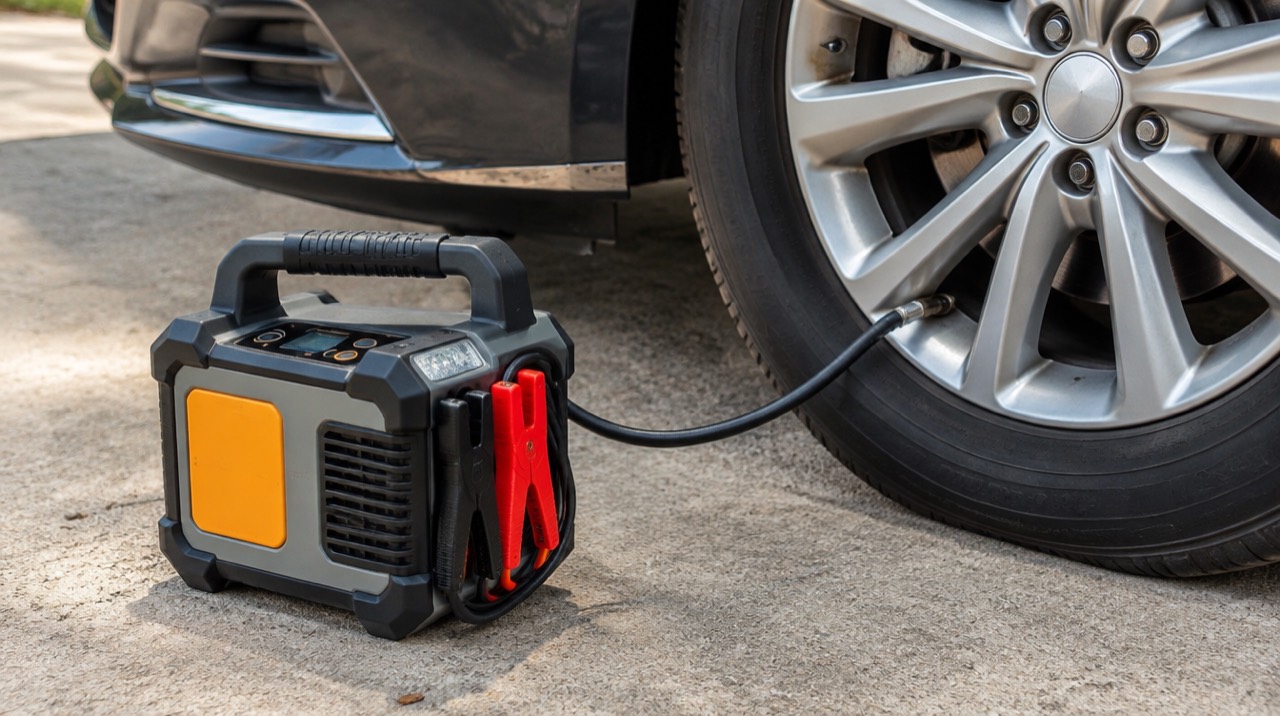
Updated Oct 2026 - Jump Starter With Air Compressor: Worth the Combo?
Is a jump starter with air compressor worth it? Spec-based look at WOLFBOX, GOOLOO, AstroAI and ETENWOLF combos vs a separate pack and inflator.
Updated Oct 2026