Can a Jump Starter Charge a Dead Battery? (No, and Why)
In this guide
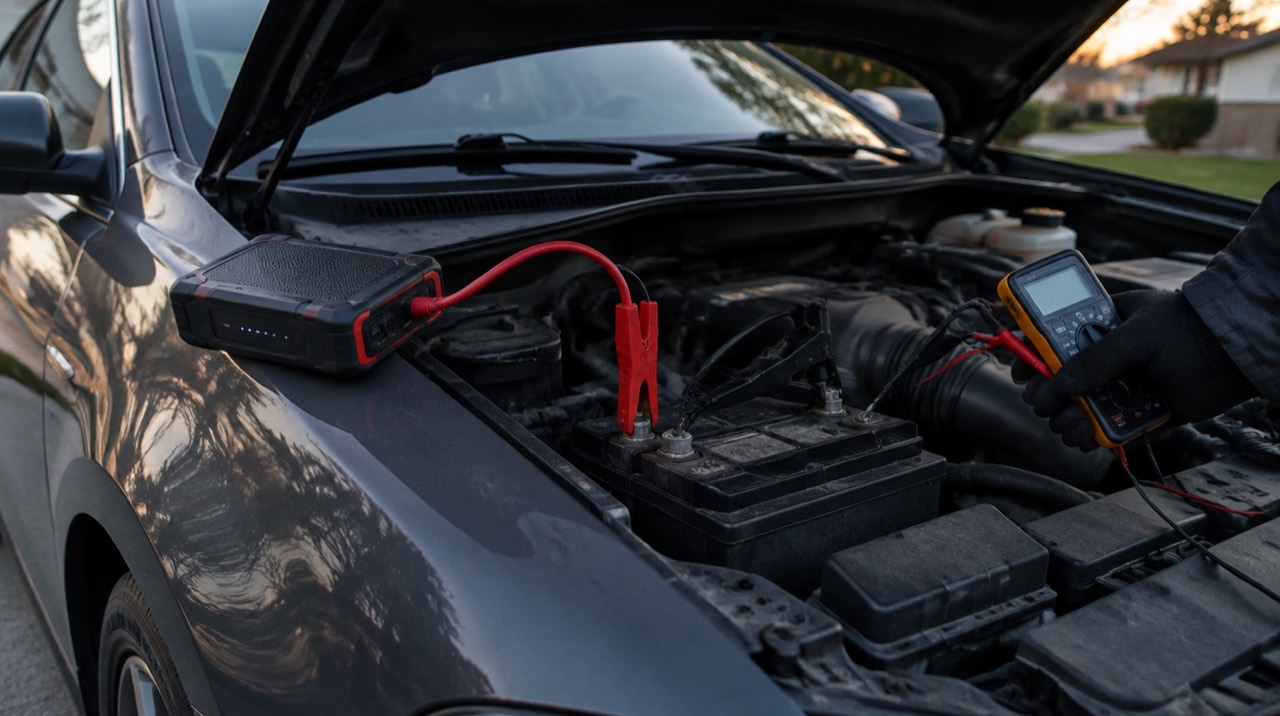
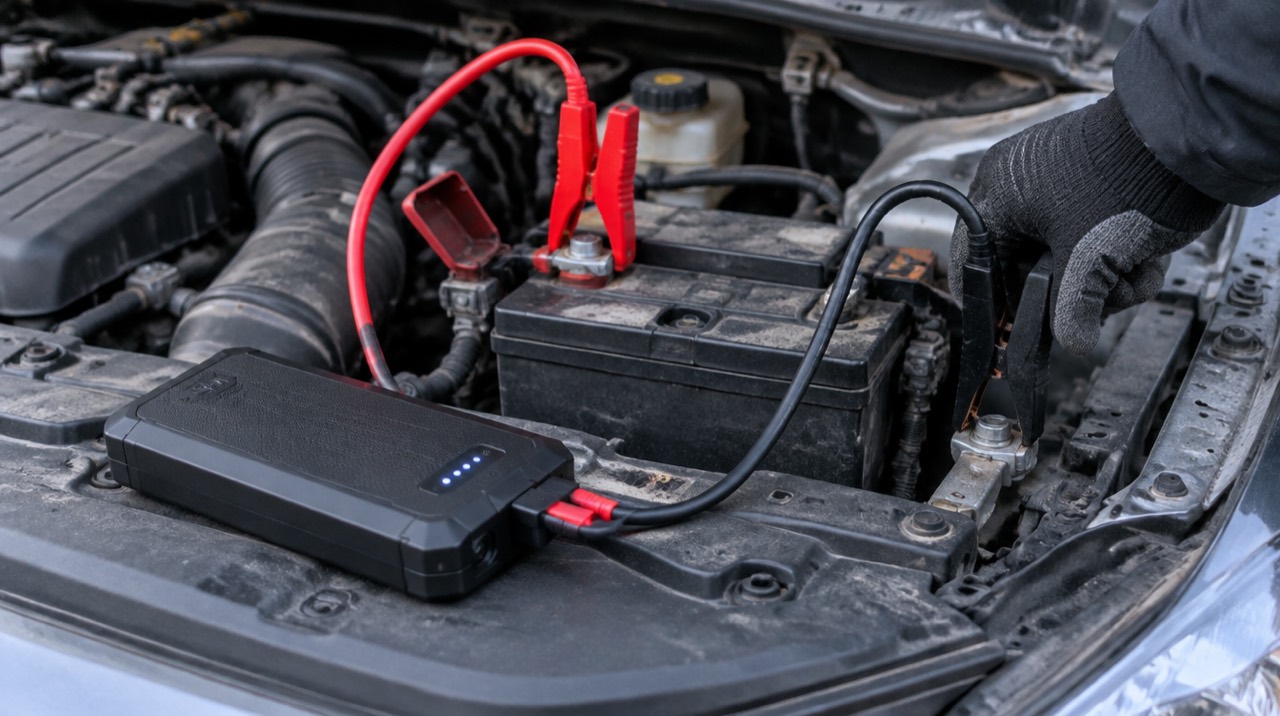
No. A portable jump starter cannot meaningfully charge a dead car battery. It is built to deliver a huge burst of current for a few seconds so the starter motor can turn the engine; once the engine runs, the car’s alternator, or better a plug-in battery charger, has to refill the battery. Even the biggest consumer packs hold only a fraction of a car battery’s energy. This guide explains the difference using maker specifications and battery-maker guidance read on 2026-10-28, and tells you what to do after a jump so you are not jumping again tomorrow morning.
Disclosure: As an Amazon Associate I earn from qualifying purchases. Some brands featured below pay a bonus commission through Amazon Creator Connections. See /disclosure/.
Jump, charge, maintain: three different jobs
| Jump starter | Battery charger | Maintainer (trickle charger) | |
|---|---|---|---|
| What it does | Cranks the engine once | Refills a flat or low battery | Holds a full battery at full in storage |
| Current | Hundreds of amps for seconds | A few to tens of amps for hours | Around 1 to 2 amps or less, indefinitely |
| Power source | Its own lithium battery | Wall outlet | Wall outlet |
| Time connected | Seconds to a minute | Hours, often overnight | Weeks or months |
| Fixes a flat battery? | No, it bypasses it | Yes, if the battery is healthy | Prevents it going flat |
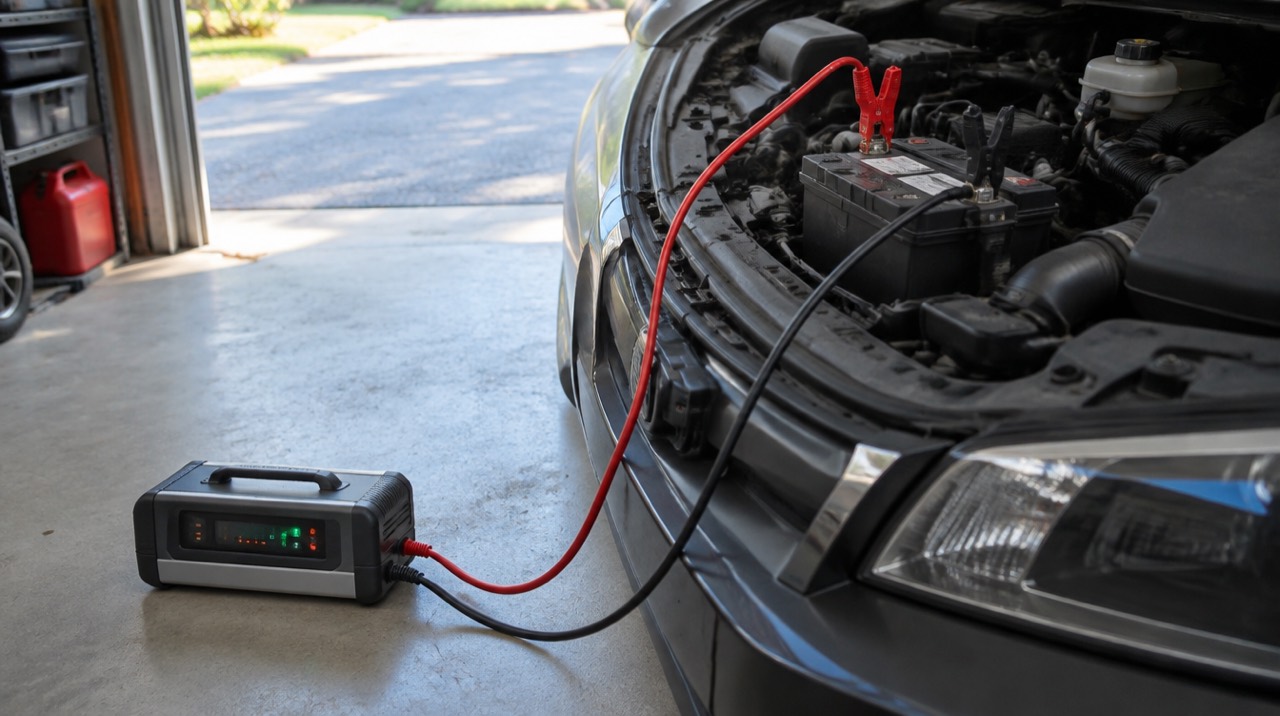
The confusion is understandable: the clamps look the same, and some large lead-acid “charger and engine starter” units do both jobs because they plug into the wall. A portable lithium jump pack is different. It is a battery that you charge, not a charger for your car battery.
Why a jump pack cannot refill a car battery
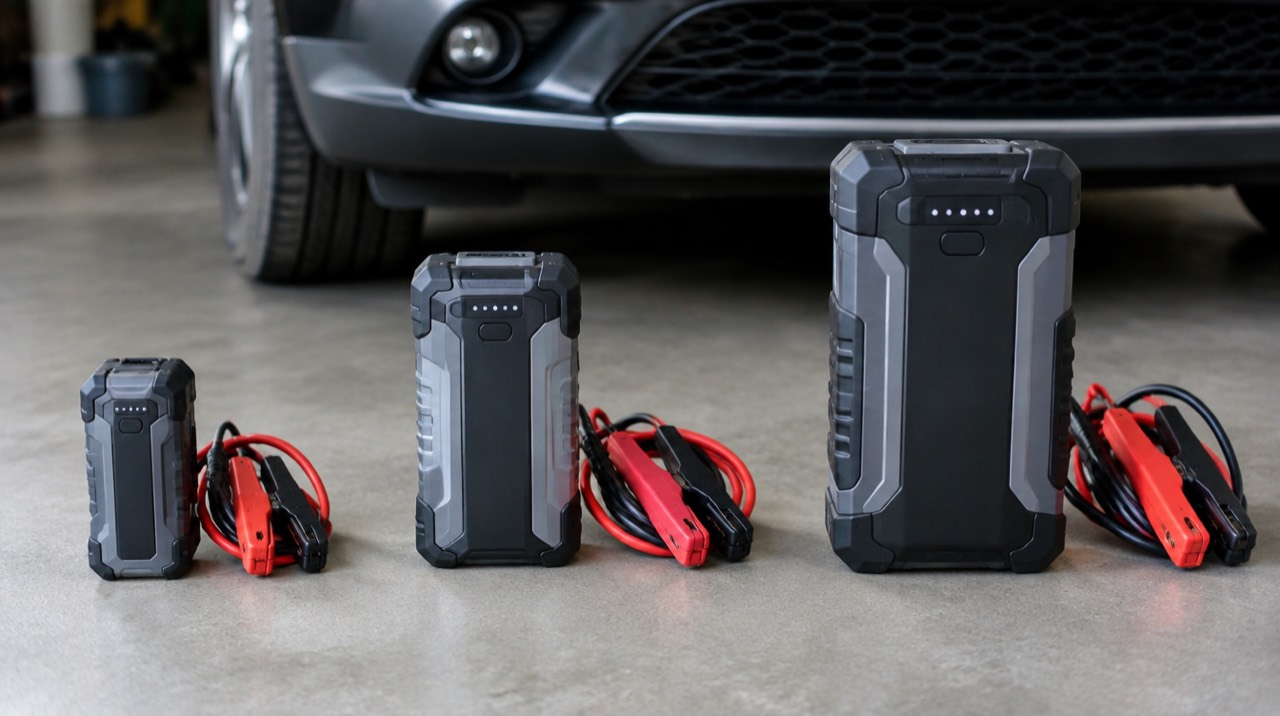
It comes down to stored energy. Jump packs list their capacity in watt-hours (Wh). Among packs we have covered, the WOLFBOX MV16 and VACASSO Z08 list 59.2Wh, the FIVNION W310 74Wh and the HDJFLU HD09 99.9Wh, which sits just under the 100Wh airline carry-on threshold.
A car battery’s energy is roughly its voltage times its amp-hour rating. As an illustration, a 12V battery rated around 50Ah stores in the region of 600Wh. Ratings vary by vehicle, but the point holds for any car battery: even a 99.9Wh pack, emptied completely into the battery with no losses, would put back about a sixth of that. In practice the transfer is far less efficient, and pack makers design their protection circuits for a short, high-current start, not a slow charge.
What the pack can do is supply enough current, for long enough, to spin the starter while the battery contributes what little it has left. That is why a pack the size of a paperback can start a car with a battery too weak to light the dash.
Boost and override modes are not charge modes
Many packs refuse to output power unless they detect a battery. If the battery is extremely flat, you press a boost or manual override button to force output. NOCO’s GB40 guide puts that threshold below 2 volts, and the FIVNION W310 listing advertises a “Force Start” for batteries drained to 0V.
Neither puts meaningful charge back into the battery. NOCO’s own knowledge base states that manual override does not provide any additional power; it simply turns off the detection and, with it, the reverse-polarity and spark protection. A battery that has fallen that far has been deeply discharged and may be damaged. Start the car, then treat the battery as suspect. How to use a jump starter covers boost mode step by step.
After the jump: how the battery actually gets recharged
Option 1: drive (fine for a light drain)
AAA’s jump-start guidance is to drive continuously for 20 to 30 minutes, with the air conditioning and rear defroster off, so the alternator can recharge the battery. Hyundai’s EV manual gives 30 minutes, and up to 60 for a fully discharged battery.
That works when the battery was only slightly drained, say a dome light left on overnight. It is less reliable after a deep discharge. Battery maker OPTIMA states that alternators are designed to maintain batteries that are near a full state of charge, that idling or a drive around the block will not recharge a deeply discharged battery, and that repeated jump-and-drive cycles can wear out the battery or the alternator.
Option 2: a plug-in charger (the right fix for a flat battery)
A smart charger refills the battery fully and stops on its own. It takes time: a 2-amp charger delivers about 2 amp-hours per hour, so replacing 25Ah takes at least 12 to 13 hours before losses. Larger chargers are quicker. Check that the charger supports your battery type (flooded, AGM, EFB or lithium), and follow its manual on whether to disconnect the battery from the car first. Hyundai’s manual, for example, warns never to recharge the battery while the vehicle’s battery cables are connected.
The NOCO GENIUS2 is a widely sold example: a 2A, 6V/12V smart charger and maintainer with temperature compensation and a force mode, listed for lead-acid (wet, gel, AGM) and lithium (LiFePO4) batteries. At 2A it suits overnight charging and long-term maintaining rather than fast recovery. NOCO and other makers sell higher-amp models in the same style if you want quicker charging; compare the amp rating and supported chemistries.

Option 3: a maintainer for cars that sit
If the battery died because the car sat for weeks, the cure is a maintainer connected during storage. It is the cheapest way to avoid needing a jump at all, and it is what classic-car, motorcycle and RV owners use over winter.
How to tell if the battery is the problem
Resting voltage (engine off for a few hours, nothing switched on) is a quick first check with a multimeter or the voltage readout some packs and chargers have:
| Resting voltage (typical flooded 12V battery) | What it suggests |
|---|---|
| About 12.6V or higher | Fully charged |
| About 12.4V | Roughly 70 to 75 percent; charge it soon |
| About 12.0V to 12.2V | Low; charge it before relying on it |
| Under about 12V | Deeply discharged; charge fully, then have it tested |
Approximate. Interstate’s battery guide pegs about 12.42V at 70 percent state of charge, and OPTIMA lists 12.6 to 12.8V for a full REDTOP; AGM and other types read differently, so use your battery maker’s chart where you can.
Voltage alone does not prove a battery is healthy. A load test, which most auto parts stores and repair shops can do, shows whether it can still deliver current. If the car needs another jump the next morning, work through car won’t start after a jump to separate a worn battery from a charging fault.
What a jump pack is good for
None of this makes a jump starter less useful. It gets you home or to a shop without a second car, and many double as a USB power bank and flashlight; see jump starter power bank features. Just pair it with a way to recharge the car battery afterwards.
Featured (disclosed relationship)
VACASSO Z08 5000A jump starter. A 59.2Wh pack rated for gas engines up to 10L and diesels up to 8L, with a listed operating range of -4°F to 140°F. VACASSO claims up to 50 starts per charge, which is a maker figure we cannot confirm. It is a jump starter like any other: use it to start the car, then drive or charge.

Not for: recharging a flat battery (no jump pack is), or 24V trucks. Its listing gives two different recharge intervals (every 3 to 6 months and every 2 to 3 months); follow the shorter one.
Featured (disclosed relationship)
FIVNION W310. A 74Wh pack rated for all gas engines and diesels up to 10L, with a built-in tire compressor and a “Force Start” mode the maker says works on batteries drained to 0V. That makes it useful for exactly the deeply flat batteries this guide is about, as long as you charge or replace the battery afterwards.

Not for: buyers who want a pocket-size pack; the built-in compressor adds bulk. Force Start is not a charge mode.
If you are choosing a pack, what size jump starter do I need matches packs to engines, and jump starter vs jumper cables compares the two ways of getting started. Packs also need charging themselves; how long does a jump starter hold a charge covers that.
Common mistakes
- Treating the pack as a charger. Disconnect it once the engine runs.
- Shutting the engine off right after a jump. You may need another jump to restart. Drive first.
- A five-minute drive and done. AAA’s minimum is 20 to 30 minutes, and a deep discharge needs a charger.
- Ignoring a repeat. A battery that goes flat twice without an obvious cause needs testing, and so does the charging system.
- Using override casually. It disables the pack’s protections and does not add power.
Bottom line
A jump starter starts the car; it does not charge the battery. After a jump, drive for at least 20 to 30 minutes, then put the battery on a plug-in charger if it was deeply drained or if the car sits often, and get the battery load-tested if it is a few years old. Check the current price on Amazon for both a pack and a charger; you will want both.
Frequently asked questions
Can I leave a jump starter connected to charge my car battery?
No. A jump pack holds a small fraction of the energy in a car battery, is designed for short bursts, and most manuals tell you to disconnect once the engine starts. Leaving it connected mainly drains the pack. To recharge the battery, drive or use a plug-in battery charger.
How long should I drive after a jump start?
AAA suggests a continuous 20 to 30 minute drive with the air conditioning and rear defroster off. Battery maker OPTIMA cautions that alternators are designed to maintain near-full batteries, so a deeply discharged battery should go on a proper charger as soon as you can.
What is the difference between a jump starter, a charger and a maintainer?
A jump starter delivers a big burst of current for a few seconds to crank the engine. A charger delivers a small current for hours to refill the battery. A maintainer (often called a trickle charger) holds a full battery at full during storage. Many smart chargers do both charging and maintaining.
What is boost or override mode for, then?
It forces a pack to deliver power to a battery so flat the pack cannot detect it. It does not charge the battery. NOCO's knowledge base says manual override does not provide any additional power, and it disables safety protections.
Is my battery ruined if it needed a jump?
Not necessarily. A battery drained by a light left on often recovers after a full charge. A battery that is several years old, was deeply discharged, or goes flat again without a reason should be load-tested. AAA notes batteries over about three years old may not hold a charge overnight.
Keep planning
- Car Won't Start After a Jump? Battery, Alternator or Starter
Car won't start after a jump start? Use the sound it makes to tell a dead battery from a bad alternator, starter or connection, and know what to check first.
Updated Nov 2026 - Jump Starter Not Working? Fixes for No Power, Lights, Clicks
Jump starter not working? Fix a pack that won't turn on, won't detect the battery, shows a red error light or only clicks, using maker manuals, step by step.
Updated Nov 2026 - What Size Jump Starter Do I Need? Amps by Engine and Climate
What size jump starter do you need? Match the maker's gas or diesel engine rating to your displacement, then size up for cold climates. Tables and examples inside.
Updated Nov 2026