Supercapacitor vs Lithium Jump Starter: Cold, Storage, Limits
In this guide
Pick a lithium jump starter if you need to start a car whose battery is completely dead, want a pack that also charges your phone, and will recharge it every few months. Pick a supercapacitor (batteryless) booster if the vehicle sits for long stretches, lives in hard cold or a hot car, and usually fails with a weak battery rather than a fully flat one. The capacitor type wins on storage and temperature; the lithium type wins on stored energy and independence. This comparison draws on a supercapacitor manufacturer’s spec sheet and manual, a capacitor cell datasheet and lithium pack listings checked on 2026-10-28. It is spec-based; we have not tested these units.
Disclosure: As an Amazon Associate I earn from qualifying purchases. Some brands featured below pay a bonus commission through Amazon Creator Connections. See /disclosure/.
How each type works
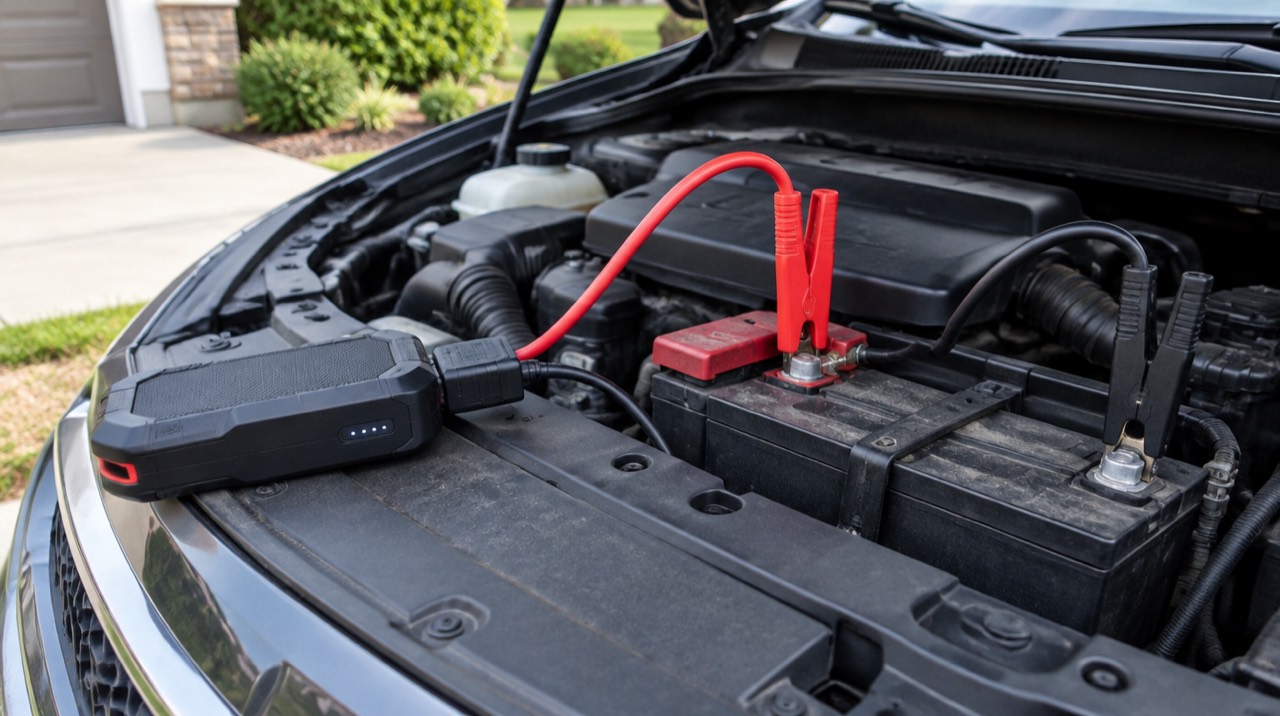
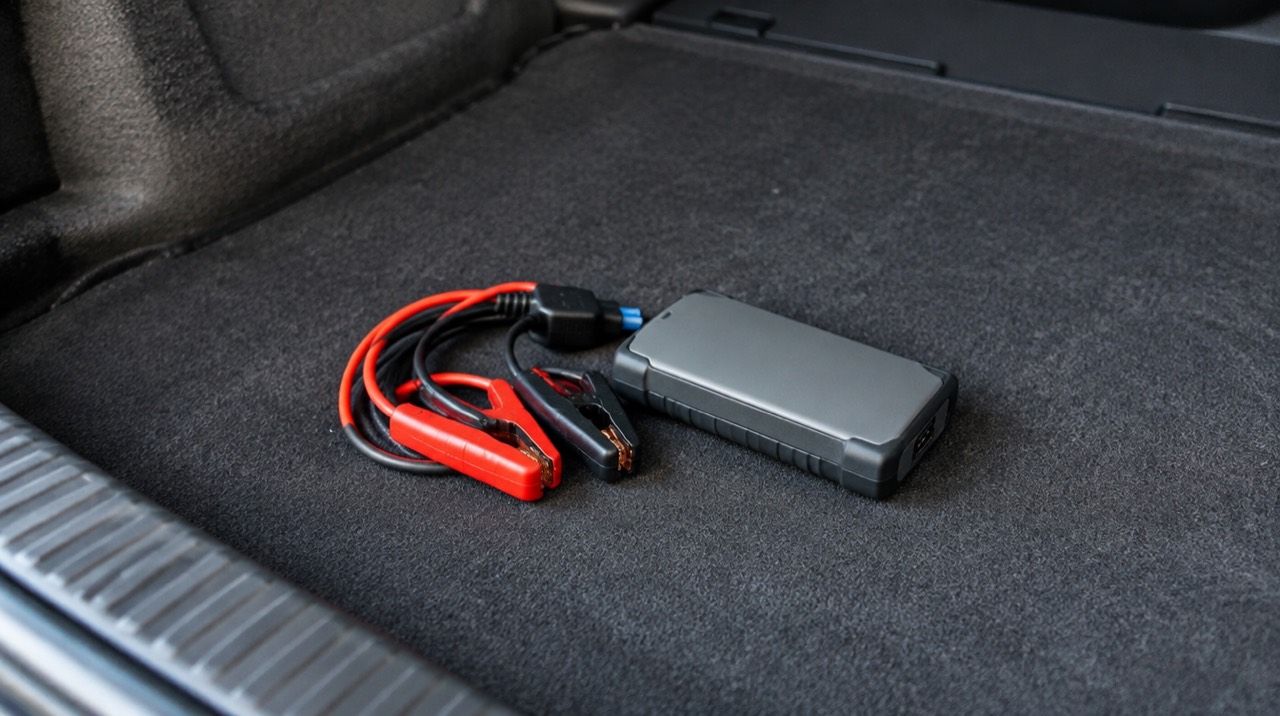
Lithium jump starter. A lithium-ion or lithium-polymer battery is charged at home, holds that energy for months, and releases it through the clamps when you crank. Everything it can do comes from what is stored inside. That is why a lithium pack can start a car with a battery at zero volts (with a force-start mode) and also run USB devices.
Supercapacitor booster. Supercapacitors store energy as charge on high-surface-area electrodes rather than through a chemical reaction. They fill and empty very fast and survive huge numbers of cycles, but each one holds far less energy than a battery cell of the same weight. A batteryless booster therefore does not try to carry energy around. It soaks up what is available at the moment, usually the residual charge left in your weak car battery, concentrates it, and releases it in one burst to the starter.
The French maker GYS describes its GYSCAP 500E this way: it uses supercapacitors with a combined 500 farads, charges itself from a vehicle with the engine running (by clamps or a 12V socket adapter), then uses that energy to start another vehicle (GYS GYSCAP 500E spec sheet). Its manual adds that it can also use the dead vehicle’s residual battery voltage to charge itself before starting.
Side by side
| Supercapacitor (batteryless) | Lithium pack | |
|---|---|---|
| Energy stored when you reach the car | Little or none; charged at the scene | All of it, charged at home |
| Starts a battery at 0V | Only with a second power source or special mode | Yes, many packs have force-start |
| Storage maintenance | None; designed to sit empty | Top up every 2 to 6 months per makers |
| Low-temperature rating (examples) | -40°F listed by consumer boosters; cells -40°C | -4°F typical (VACASSO, FIVNION, ETENWOLF) |
| High-temperature rating (examples) | 140°F to 158°F listed | 122°F to 140°F typical |
| Cycle life claims | Hundreds of thousands to one million | Not usually published |
| Time to first crank | Seconds to a few minutes of charging | Immediate |
| USB power bank | Rare, small | Standard |
| Weight | Pro units heavy (GYSCAP 10 kg); consumer units vary | Compact; the largest pack we checked (HDJFLU HD09) lists 3.2 lb |
Ratings are the makers’ own: consumer boosters such as Brave, Motorwerk and Autowit list operating ranges of about -40°F up to 158°F in retailer listings, and the lithium ranges come from the Amazon listings named below.
Where supercapacitors genuinely win
Cold
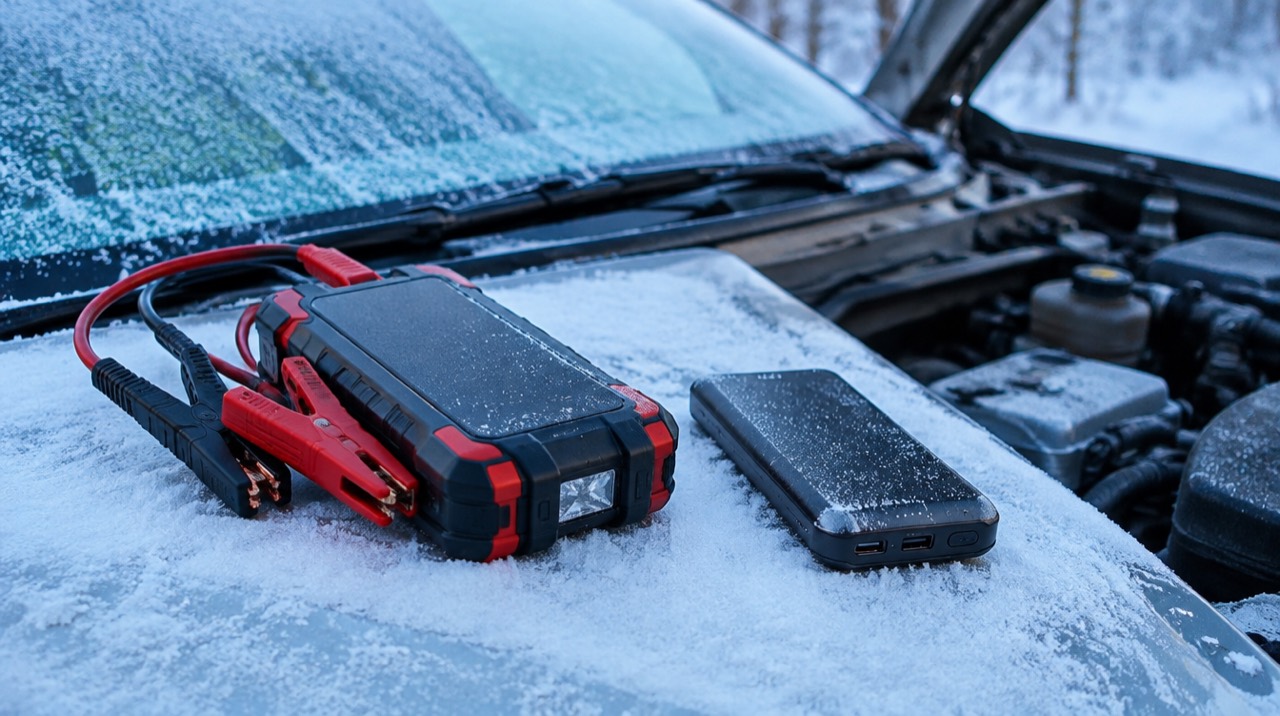
The cells inside a supercapacitor are rated for deep cold. Maxwell’s datasheet for a standard 2.7V, 100F ultracapacitor cell lists an operating range of -40°C to 65°C, a projected 500,000 cycles and a 10-year projected life at room temperature (Maxwell 2.7V 100F datasheet). Lithium packs we checked list -4°F (-20°C) as the low end for operation, and lithium cells should generally not be charged below freezing; NOCO’s guidance is roughly 32°F to 104°F for charging. In a northern winter that gap is real. Jump starters in cold weather covers the lithium side in depth.
One caveat: a batteryless booster borrows energy from your car battery, and a cold battery gives up its charge reluctantly. A capacitor booster in -30°F weather still depends on what the car battery can deliver over a couple of minutes.
Storage and heat
Because a capacitor booster is meant to sit empty, it does not need recharge reminders, and it does not suffer the slow self-discharge and heat aging that lithium packs do. GYS goes as far as saying its unit is “always operational, even after years in storage.” That suits a classic car, a boat, a seasonal vehicle or a farm truck that may sit for months. Consumer boosters also tend to list higher maximum temperatures than lithium packs, which matters in a sun-baked cabin. Lithium heat rules are in lithium jump starter safety.
Cycle life
Capacitors tolerate repeated rapid charge and discharge far better than batteries. GYS claims one million cycles for its supercapacitors. Consumer brands make similar but less specific claims. For a shop or fleet starting many vehicles a day, that durability is the attraction.
Where lithium clearly wins
A battery at zero
If the car battery has been fully drained (a dome light left on for a week, a parasitic drain, a dead cell), there is nothing for a capacitor to harvest. The GYSCAP manual covers this with a bypass mode for batteries below about 8V and a forced SOS mode, and notes that a failed first attempt drains the unit so it must be recharged before trying again. In practice, that means finding another running vehicle or a power source. A lithium pack brings its own energy: the FIVNION W310 listing, for example, advertises a Force Start button for batteries drained to 0V.

Stored energy and extras
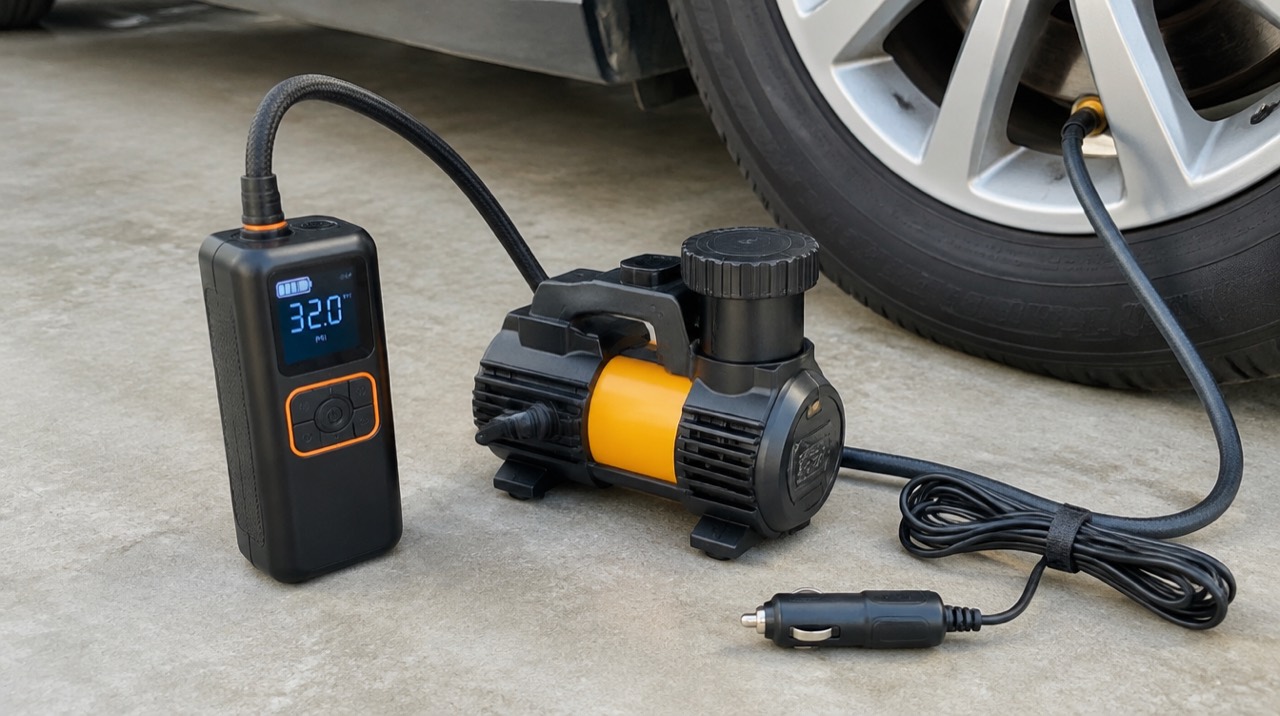
The same Maxwell cell that survives -40°C stores about 0.10 Wh in 21 grams. The lithium car packs we checked list 59 to 99.9 Wh (VACASSO Z08, FIVNION W310 at 74 Wh, HDJFLU HD09 at 99.9 Wh in a 3.2 lb body). That difference is why lithium packs can also run a compressor, charge a laptop, or attempt several starts in a row without help, while capacitor boosters mostly do one thing: one burst at a time.
Speed and simplicity
With lithium you connect, switch on and crank. With a capacitor booster you connect, wait while it charges from the car battery (sellers describe about two to three minutes for consumer units), then crank. If the first attempt fails, you wait again or find a donor.
Lithium packs with published cold ratings
If you choose lithium, prioritize a published operating range and a rating comfortably above your engine. These two list -4°F as their lower limit.
Featured (disclosed relationship)
ETENWOLF J1 2000A jump starter. Rated for 8.0L gas and 6.5L diesel, up to 35 starts per charge, a stated -4°F to 140°F operating range (the listing says it starts in temperatures “as low as -4°F”), starts batteries down to 9V and recharges in about 2 hours. A smaller, simpler pack for cars and SUVs.

Not for: large diesels, or long unattended storage without a recharge plan.
On the batteryless side, we could not confirm a current Amazon US listing for a consumer supercapacitor booster with a published manual, so we are not linking one. GYS’s GYSCAP range is a professional, mains-free unit sold mainly through European and tool distributors; consumer brands such as Autowit (SuperCap 2) sell smaller units, with specs that come from seller listings rather than manuals. If you shop for one, look for a published operating range, the minimum battery voltage it can charge from, and what it does when the battery is at zero.
Decision guide
- Daily driver, normal climate: lithium, sized for your engine. See what size jump starter do I need.
- Car, boat or tractor that sits for months: a supercapacitor booster, or a lithium pack you will genuinely recharge every few months. How long does a jump starter hold a charge shows how quickly packs drain.
- Below -4°F regularly: a capacitor booster plus a lithium pack kept indoors, or cables. No lithium listing we read promised operation below -4°F.
- Fleets and shops starting many vehicles: a professional capacitor unit, charged from a running service truck.
- Battery that dies to zero: lithium with a force-start mode, or cables and a donor car (jump starter vs jumper cables).
Mistakes to avoid
- Expecting a capacitor booster to revive a battery at 0V by itself. It needs something to draw from.
- Cranking repeatedly on an empty capacitor. Recharge it between attempts as the manual says.
- Storing a lithium pack empty for a year. Deeply discharged lithium packs may not recover.
- Ignoring the car battery. Either type is a rescue. A battery that needs repeated boosts needs testing or replacement.
Bottom line
Supercapacitor boosters are the better tool for long storage and extreme temperatures, but they need a weak battery or another power source to work. Lithium packs carry their own energy and can start a car from zero, at the cost of recharging and narrower temperature limits. For most drivers lithium is the practical default; for seasonal vehicles and very cold climates, a batteryless booster earns a place alongside it.
Frequently asked questions
What is a supercapacitor jump starter?
A jump starter with no internal battery. It stores energy in supercapacitors, which charge in seconds to minutes from whatever is left in your car battery, from another running car or from a USB or 12V source, then dump that energy into the starter. GYS describes its GYSCAP 500E as charging from a vehicle with the engine running and then starting another vehicle.
Can a supercapacitor jump starter start a completely dead battery?
Not on its own residual-charge method. It needs some voltage left in the car battery, or a separate charge from another vehicle or a power source. GYS adds a forced SOS mode and a bypass mode for deeply discharged batteries, and its manual says a failed attempt drains the unit, which then needs recharging before you try again.
Are supercapacitor jump starters better in cold weather?
Generally they tolerate cold better on paper. Maxwell's ultracapacitor cells are rated to operate from -40°C (-40°F), and consumer batteryless boosters commonly list -40°F at the low end. Lithium packs we checked list -4°F as their lower limit. Cold still weakens the car battery the capacitor must draw from.
Do supercapacitor jump starters need to be recharged in storage?
No. They are designed to sit empty and be charged at the moment of use, which is their main advantage. GYS says its unit stays operational even after years in storage. A lithium pack, by contrast, should be topped up every two to six months depending on the maker.
Which should I buy?
Choose lithium if you want to start a car whose battery is fully flat, charge a phone, or carry a small pack. Choose a supercapacitor booster if the car sits for long periods, lives in extreme cold or heat, and its battery usually dies slowly rather than to zero, or if you can carry a booster to a second running vehicle.
Keep planning
- Best Black Friday Jump Starter Deals 2026: Timing and What to Buy
The best jump starter Black Friday deals in 2026, with guidance on which specs matter, which brands discount and how to avoid buying undersized packs.
Updated Nov 2026 - Best Portable Jump Starter for Cars, Trucks and Diesels (Spec Picks)
The best portable jump starter for your engine and fuel: spec-based picks from NOCO, GOOLOO, ETENWOLF and VACASSO, sized for cars, V8 trucks, diesels and winter.
Updated Nov 2026 - Cordless vs 12V Tire Inflator: Speed, Duty Cycle, Convenience
Cordless vs 12V tire inflator compared on published specs: airflow, duty cycle, tires per charge and truck-tire limits, so you can pick the right type.
Updated Oct 2026